
Restorative Dentistry
Bone Grafting
An implant needs solid bone to hold it. If a tooth has been missing for a while, or came out with an infection, the bone in that spot often shrinks. A bone graft rebuilds it. Most grafts are small, done with local freezing, and planned on a 3D scan so you know up front whether you need one at all.
Why it matters
Benefits
- Planned on a 3D CT scan, so you know before any surgery whether a graft is needed and how much.
- Socket preservation at the time of an extraction keeps the ridge from shrinking in the first place.
- Done in-house as part of your implant plan. One team, one plan, one quote.
- Oral or IV sedation available for anyone who would rather not be aware of it.
- Many implant cases need no graft at all. We tell you that too.
What to expect
The process
- 01
3D CT scan
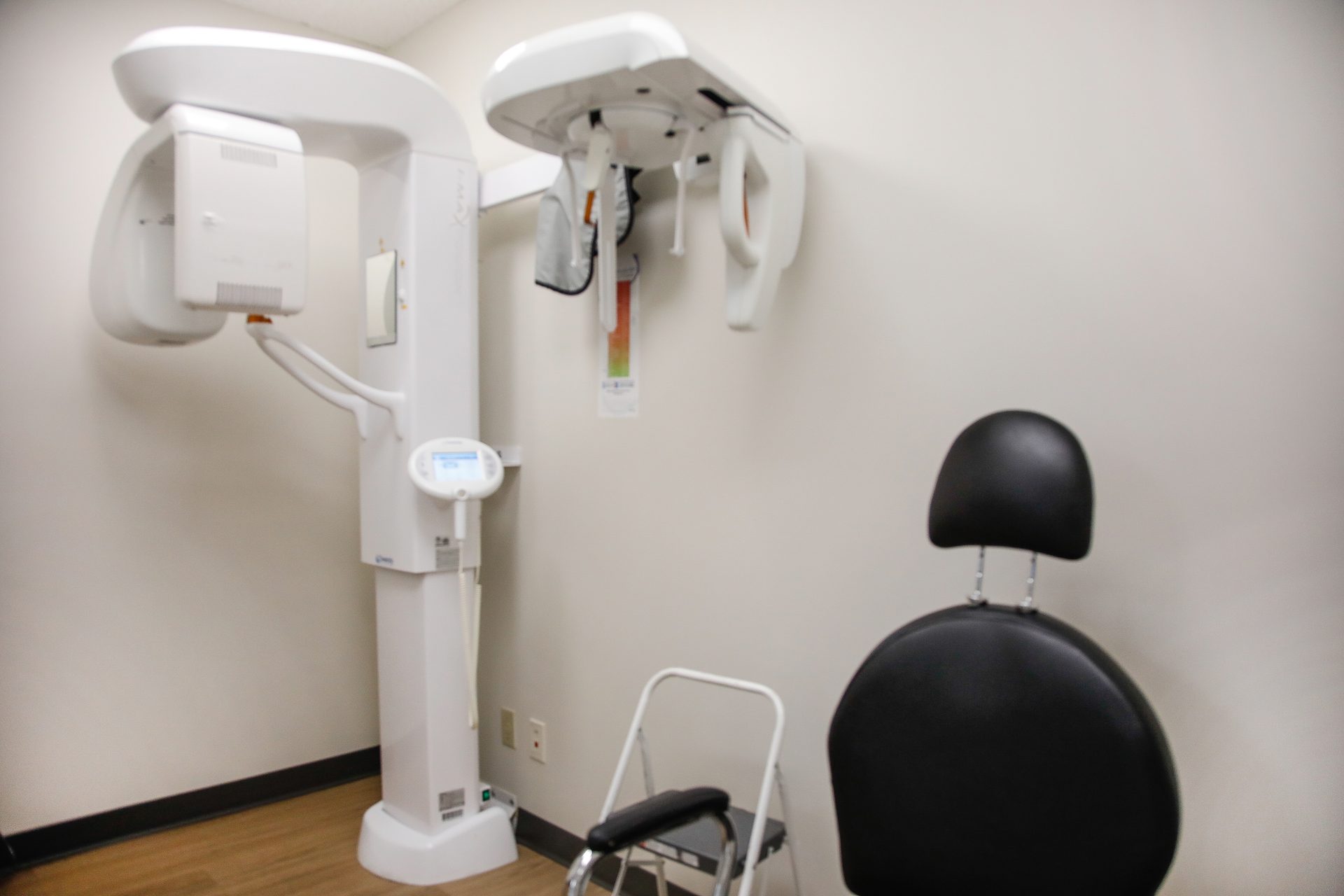
A cone-beam CT measures the width and height of bone where the implant will go. This is the step that tells us whether a graft is needed, and it is the same scan we use to plan the implant.
- 02
Choosing the graft
A socket graft is placed the day a tooth comes out. A ridge graft rebuilds a spot that has already shrunk. The material is a sterile bone mineral that your own bone grows into and replaces over time.
- 03
The procedure
Grafting is done with local freezing, with sedation if you prefer. The graft material is placed, covered with a small membrane, and the gum is closed with a few stitches. Most appointments take under an hour.
- 04
Healing
Your own bone grows through the graft over three to six months. Discomfort is usually mild for a few days and managed with regular pain relievers.
- 05
Implant placement
Once the scan shows the graft has matured, the implant is placed into solid bone and the rest of the implant process carries on as usual.
Why bone matters for implants
A dental implant is a titanium post that fuses with your jawbone. For that to work there has to be enough bone around it: enough width to hold the post and enough height to keep it clear of the sinus above or the nerve below. When a tooth is lost, the bone that used to hold it starts to shrink. After a few years, the ridge can be too thin or too short for an implant to sit safely.
A bone graft rebuilds that foundation. It is a routine part of implant dentistry, and planning it on a 3D scan is what makes the outcome predictable.
Two kinds of graft we do here
Socket preservation. When a tooth is extracted and an implant is likely, we fill the empty socket with graft material the same day. It takes a few extra minutes and usually means little or no grafting later.
Ridge grafting. When bone has already shrunk, we rebuild the ridge in a separate short procedure, let it heal, and then place the implant into the new bone.
Grafts that involve a large amount of bone, or the upper sinus, are planned case by case. If yours is one we would rather have a specialist handle, we say so at the planning stage, not partway through.
Part of one plan
Bone grafting is never a standalone procedure here. It is a step in your dental implant plan, quoted and scheduled alongside the implant itself. If you have been told elsewhere that you do not have enough bone for an implant, it is worth a second look with a 3D scan.
Book a consultation or call 403-271-2221 to find out whether a graft is part of your implant plan.
FAQ
Questions we hear most often
- Do I need a bone graft to get an implant?
- Not always. Many patients have enough bone and go straight to the implant. The 3D scan at your consultation gives a clear answer, and if a graft is needed we show you exactly where and why.
- Is bone grafting painful?
- The procedure itself is done under local freezing, so you will not feel it. Afterwards, expect mild soreness and some swelling for a few days, similar to an extraction. Sedation is available if you would rather be relaxed or asleep.
- Where does the bone come from?
- Most grafts use a processed, sterile bone mineral that acts as a scaffold for your own bone to grow into. Over several months your body replaces it with your own bone.
- How long before I can get the implant?
- Usually three to six months, depending on the size of the graft. A socket graft placed at the time of an extraction is often on the shorter end.
- How much does bone grafting cost in Calgary?
- It depends on the size and type of graft. It is quoted as part of your overall implant plan, in writing, before anything starts, and we direct-bill most insurance plans.
- Can I avoid needing a graft?
- Often, yes. The bone shrinks most in the first year after a tooth is lost. Placing a socket graft when the tooth comes out, or planning the implant soon after, usually means less grafting or none at all.
Ready to talk it through?
Book a consultation.
We'll listen first, then build a plan around your goals and comfort.